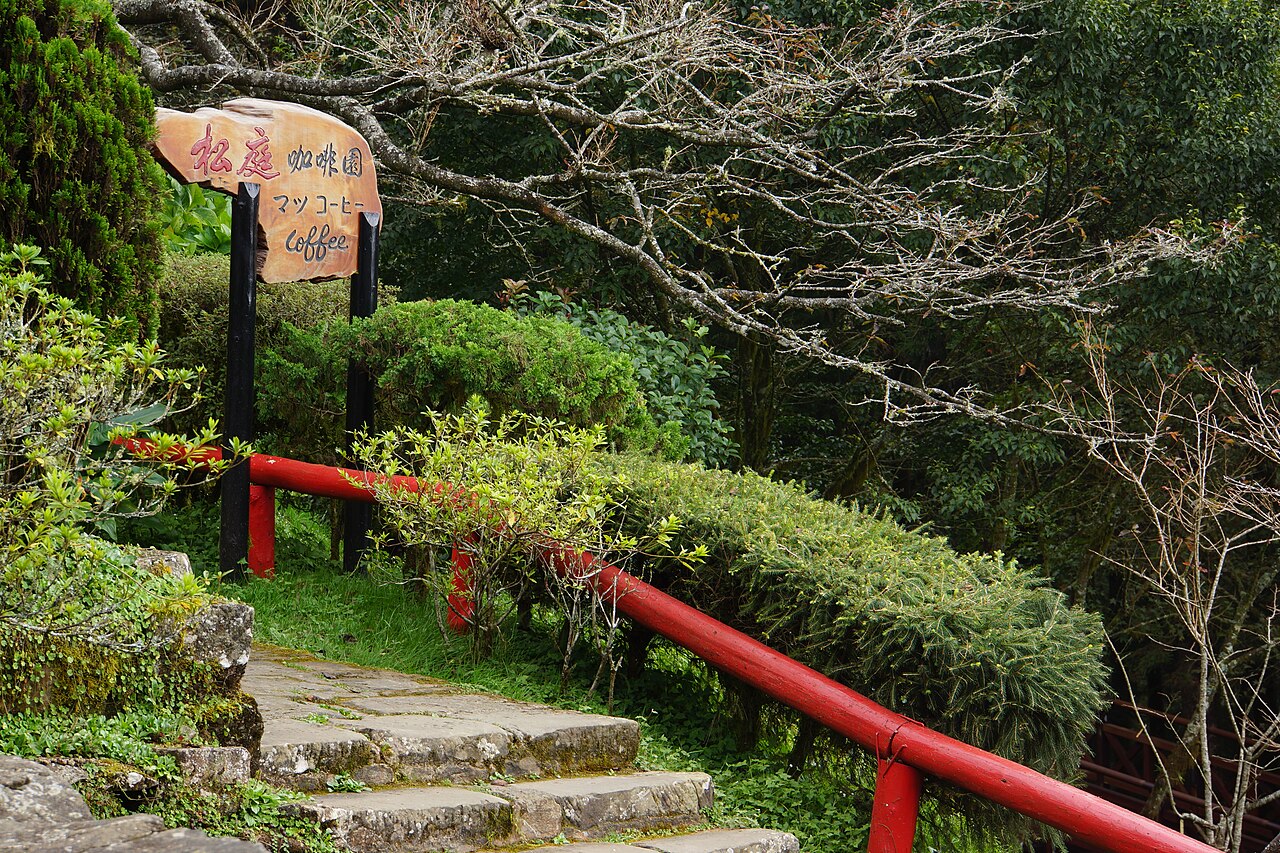
Coffee was planted in Taiwan more than a century ago under Japanese rule, first for research in Chiayi and later in Yunlin. Production peaked between the 1940s and the 1960s. Much of it went to imperial homes in Japan.
Costs were high. By 1972 the government had dropped the crop because local beans cost more than imports.
After the 1999 earthquake, government support for local specialties helped bring coffee back. Gukeng, called the cradle of Taiwanese coffee, has held a coffee festival since 2002.
Field notes
What the record says
- Coffee trees were first planted in Taiwan more than a century ago under Japanese colonial rule, with arabica research in Chiayi before planting spread to Yunlin.2
- Gukeng's production peaked between the 1940s and 1960s, and the coffee was mostly drunk at imperial residences in Japan and by senior officials in Taiwan.1
- By 1972 the government dropped coffee because domestic beans cost more than imports.2
- The 921 earthquake of 1999 prompted renewed government support for coffee through a 'one township, one specialty' programme.2
- Gukeng is called Taiwan's 'cradle of coffee cultivation' and has held an annual coffee festival since 2002.1
- In 2012 about 50 hectares in Gukeng were planted with coffee.1
- Liu Chien-Ju became Taiwan's first official coffee cupper, with government-funded training.2
What we couldn't confirm
The Hosei University paper on Taiwanese coffee history could not be decoded. Exact Japanese-era start dates (1901, 1902, 1930s) differ in search snippets and are not given. No opened source gave Alishan altitudes.
Sources
- Gukeng coffee festival (Taiwan news report) · Taipei Times, 2012 in the bibliography
- Coffee production past and present in Taiwan · Taiwan News, 2023 in the bibliography