The Portuguese brought coffee to Timor in the early 19th century. In 1927, on a Typica farm planted around 1917, growers found trees that rust did not touch.
It was a natural cross between arabica and robusta, now called the Timor Hybrid. Breeders used it to create the Catimor and Sarchimor lines that cover large areas of the world's coffee land. World Coffee Research now reports that its rust resistance is starting to break down.
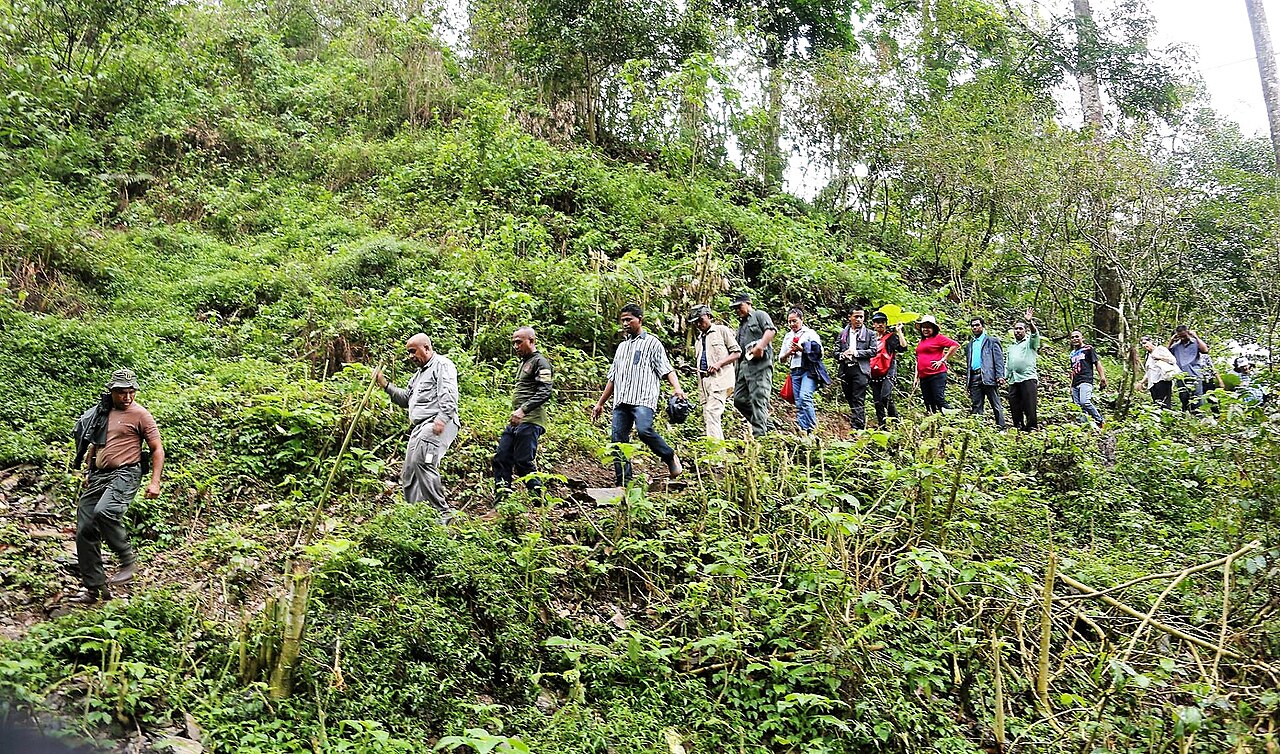
Many farms were abandoned after Indonesia invaded in 1975, and some plants now grow semi-wild. Coffee is still the country's largest non-oil export.
Home-roasted coffee
How it's made. In rural homes, beans are roasted in a pan over an open fire, ground, and placed in a cloth filter.1
How it's served. Hot water is poured through the cloth.
What time is taking away
Original Hibrido de Timor
The original hybrid trees now grow semi-wild on abandoned farms. Slow Food lists them as at risk because little is known about their genetics, young people are leaving farming, and instant coffee is spreading in Dili.1
What the record says
- Coffee was introduced to Timor by the Portuguese in the early 19th century.2
- The Timor Hybrid was found in 1927 on a Typica plantation started in 1917; local farmers began growing it in the 1940s.1
- It is a natural cross of arabica and robusta and resists coffee leaf rust, a trait no other naturally occurring arabica has.1,3
- Catimors (Timor Hybrid x Caturra) and Sarchimors (Timor Hybrid x Villa Sarchi) descend from it and are planted across large areas worldwide.3
- World Coffee Research reports that the rust resistance from the Timor Hybrid is showing signs of breaking down.3
- Many plantations were abandoned after the 1975 Indonesian invasion, and the plants now grow semi-wild.1
- Coffee is Timor-Leste's largest non-oil export: $26.4 million of $108 million in total exports in 2017.2
- Almost one-third of Timorese households grow coffee, according to an ADB economist.2
Slow Food gives 1927; World Coffee Research says only 'the 1920s'. Slow Food says about half the population depends on coffee as their only income; this was not repeated because other figures differ. Harvest months and altitude were not found in opened sources.
- Caffè originale Hibrido di Timor (Ark of Taste) · Slow Food Foundation for Biodiversity in the bibliography
- Coffee industry of Timor-Leste · Wikipedia in the bibliography
- A new Arabusta for the 21st century · World Coffee Research, 2018 in the bibliography