In colonial West Sumatra, farmers had to grow coffee for the Dutch and hand over the beans. According to SBS and the Jakarta Post, people brewed the leaves left on the plantations instead.
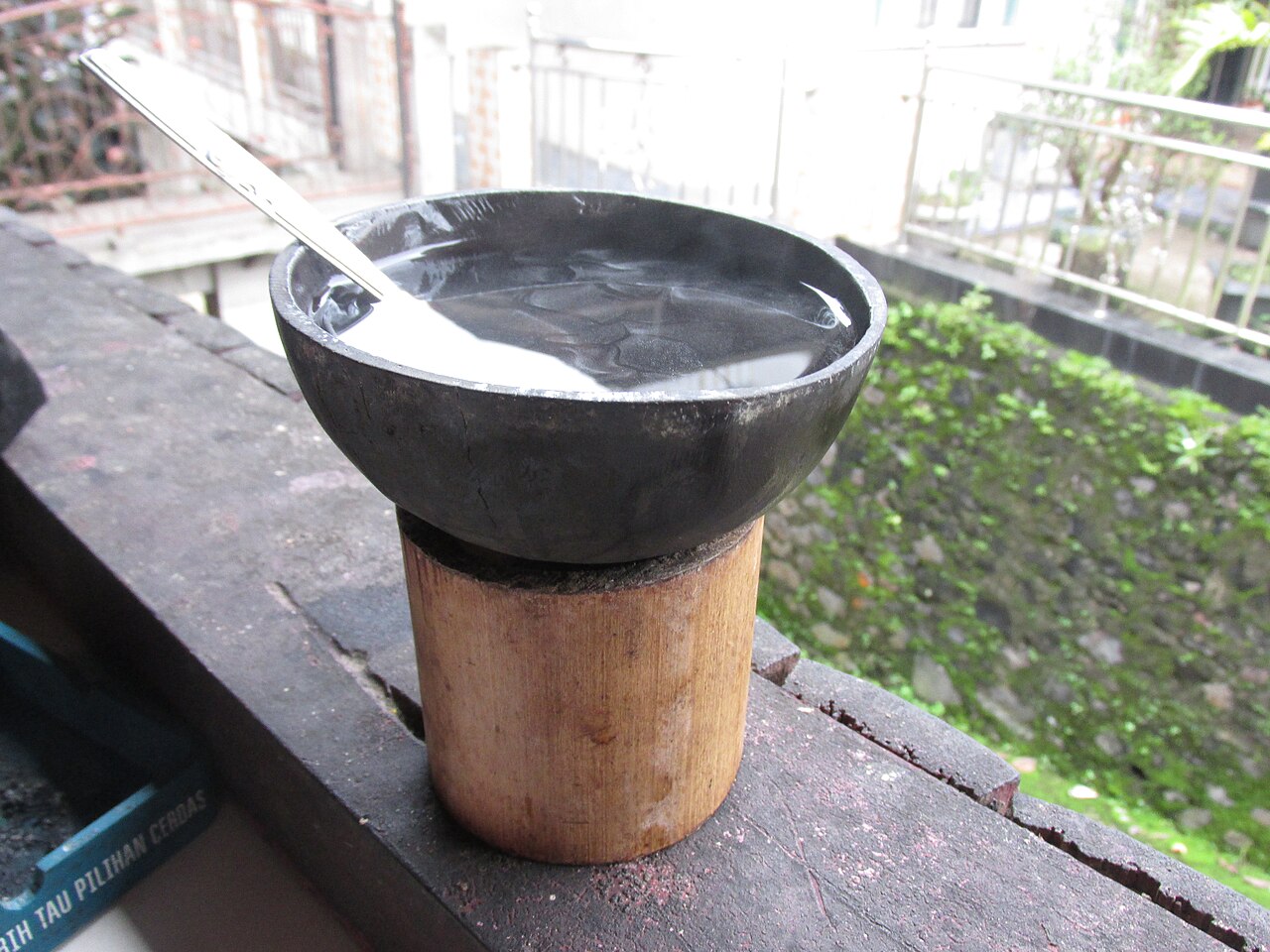
The drink is kawa daun. Leaves are dried, roasted, and boiled into a dark brew that tastes more like tea than coffee. It is served in a coconut shell set on a bamboo stand.
It is still part of everyday life in the highlands, often drunk with sticky rice and durian.
Coffee-leaf infusion · kawa daun (teh kawa daun)
How it's made. Coffee leaves are sun-dried to cut bitterness, roasted, then boiled in water. One Jakarta Post account describes boiling over a fire of cinnamon wood at a roadside stall in Koto Baru.1,2
How it's served. Served in a coconut shell on a bamboo base, with sugar, condensed milk or ginger, and sometimes egg. Often eaten with lamang (sticky rice), durian or fried banana.
What time is taking away
What the record says
- West Sumatra was a major coffee region under Dutch rule, and estate inspectors banned plantation workers and farmers from consuming the beans.1
- The Jakarta Post dates kawa daun to the early 19th century and the Dutch Cultivation System; SBS places it in the mid-19th century.1,2
- Kawa daun leaves are sun-dried, roasted for a few hours, then boiled; the drink tastes more like tea than coffee.1
- It is served in coconut shells on a bamboo base.1
- Food historian Fadly Rahman describes the drink as reflecting Indonesia's 'bitter story of colonialism'.1
- The European Food Safety Authority approved coffee-leaf infusions for the EU market in February 2020.1
The colonial-origin story is the common telling, but some sources (a National Museum of Indonesia label and a cited 2018 Journal of Ethnic Foods paper) suggest leaf drinking may predate the Dutch. Neither could be opened (the museum PDF would not decode), so this is flagged rather than stated. Dates differ between early and mid-19th century.
- Are we ready for tea made from coffee leaves? · SBS Food, 2020 in the bibliography
- 'Leaf it to tea': Unboxing tea cultures across the archipelago · The Jakarta Post, 2016 in the bibliography