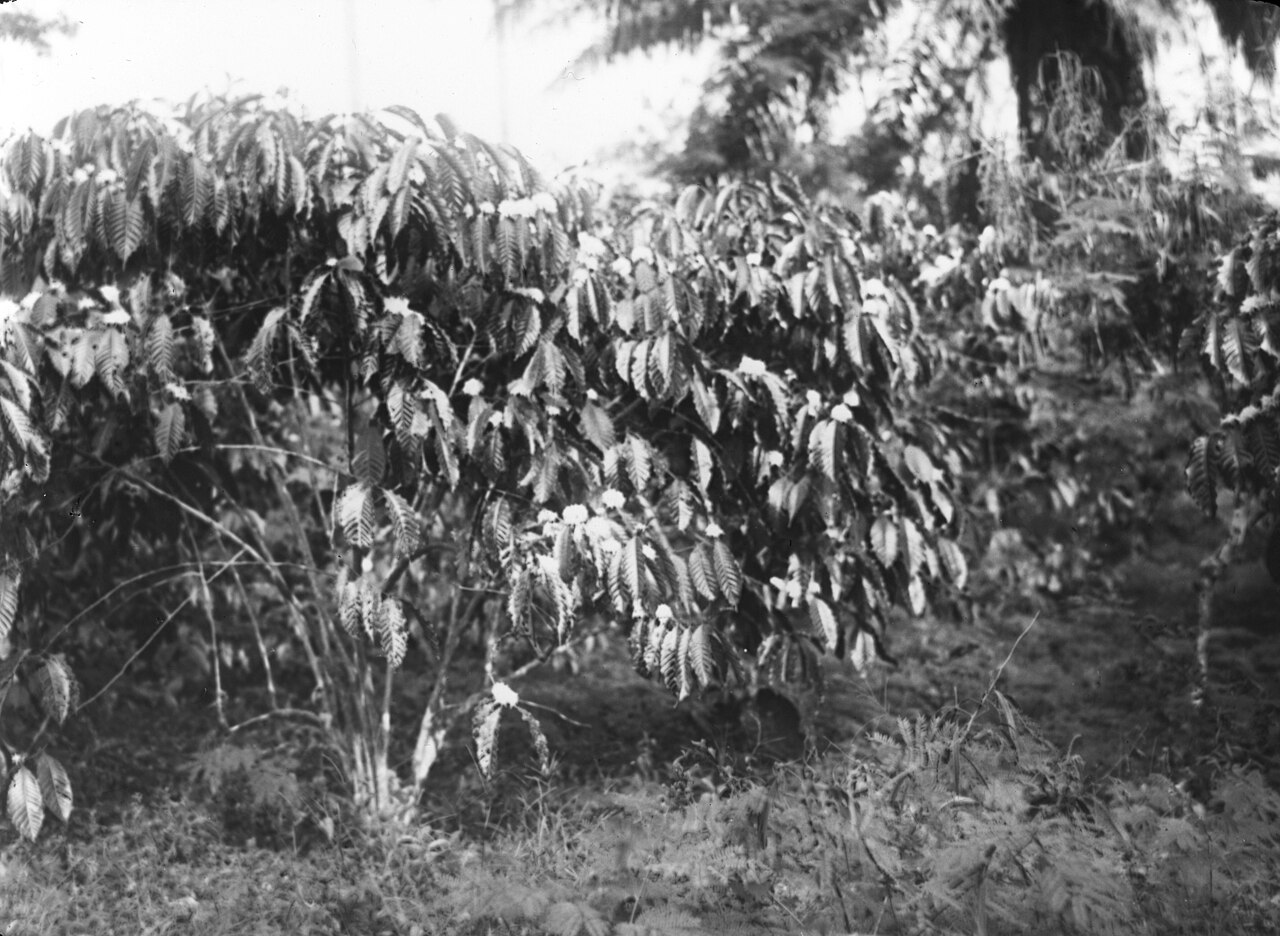
Côte d'Ivoire once ranked third in world coffee production, behind Brazil and Colombia. Most of its crop was robusta, cheaper and more bitter than arabica and often used in blends.
By the mid-1980s, 60% of its coffee trees were over 15 years old and yielding well below average. It is also part of the native range of Coffea stenophylla, the rediscovered West African species.
Much of the robusta used for Senegal's café Touba is imported from Côte d'Ivoire.
Field notes
What the record says
- Côte d'Ivoire ranked third in world coffee production, behind Brazil and Colombia.1
- Between 1965 and 1984, annual output averaged 252,000 tons.1
- Yields averaged 250 kg per hectare, about a quarter of those in Colombia and Brazil.1
- By the mid-1980s, 60% of coffee trees were over 15 years old.1
- The main harvests were in August and from November through January.1
- Coffea stenophylla is native to Ivory Coast as well as Guinea and Sierra Leone.2
- Most café Touba vendors in Senegal use robusta largely imported from Ivory Coast.3
What we couldn't confirm
Main source is the US Library of Congress country study, which describes the 1980s; current production is different and was not sourced. Publication year was not shown on the page. Harvest months reflect that era.
Sources
- Ivory Coast: coffee (country study) · US Library of Congress, via countrystudies.us in the bibliography
- Forgotten species could future-proof coffee in a warming world · Phys.org (AFP), 2021 in the bibliography
- How a Sufi saint's coffee recipe took Senegal by storm · New Lines Magazine, 2026 in the bibliography