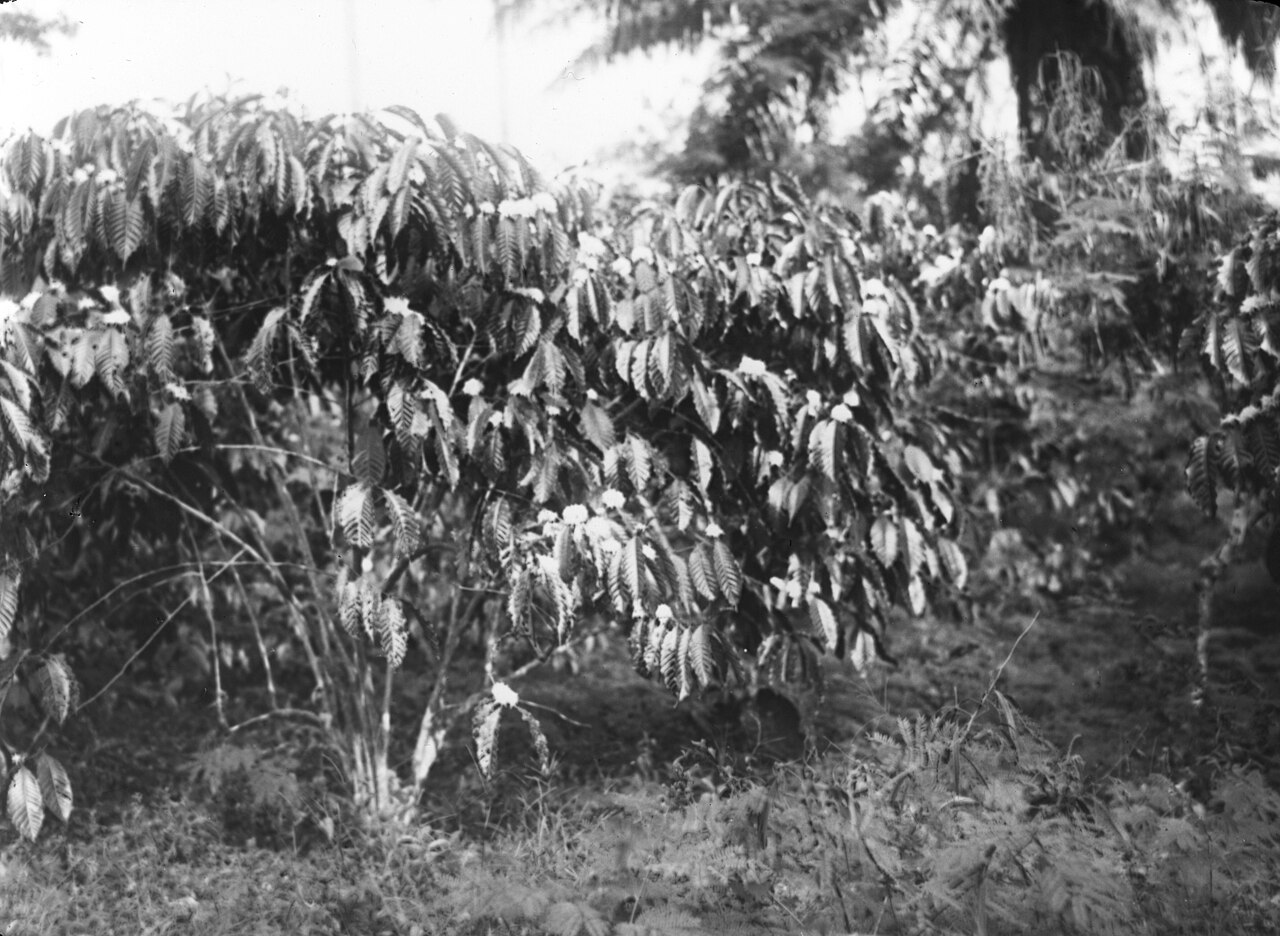
Kenya's best-known coffee variety began with a single tree. SL28 was selected in 1935 at Scott Agricultural Laboratories from a population called Tanganyika Drought Resistant, grown from seed collected in Tanganyika in 1931.
SL28 has exceptional cup quality potential at high altitude and is notably drought tolerant, but it is susceptible to leaf rust, coffee berry disease and nematodes.
Kenyan coffee history runs from 1893 to the present. A 2022 study links falling exports to weak support for farmers and problems with prices, marketing, finance and cooperative management.
What the record says
- SL28 was selected in 1935 from a single tree at Scott Agricultural Laboratories, now Kenya's National Agricultural Research Laboratories.1
- The parent population, Tanganyika Drought Resistant, came from seed collected in Tanganyika (now Tanzania) in 1931.1
- Trees selected at Scott Labs between 1935 and 1939 were given the 'SL' prefix, and SL28 was considered the best of them.1
- Genetic tests place SL28 in the Bourbon-Typica group.1
- SL28 is susceptible to coffee leaf rust, coffee berry disease and nematodes, but notably drought tolerant.1
- A 2022 study says coffee supports more than 700,000 Kenyan households.2
- The same study traces Kenyan coffee from 1893 and blames declining exports partly on poor support for farmers.2
Thin. The 1893 Bura mission story (French missionaries, seed from Aden) and the 1935 coffee auction were seen only in search snippets and were not used. No ritual or lost art found in an opened source. Harvest months not sourced.
- SL28 · World Coffee Research, Arabica Coffee Varieties catalog in the bibliography
- Historical analysis of coffee production and associated challenges in Kenya from 1893 to 2018 · Southern Journal for Contemporary History (University of the Free State), 2022 in the bibliography