During the Civil War, the Union blockade cut most Southern cities off from coffee. Confederate coffee prices rose from about $1.20 a pound in March 1861 to about $196 in February 1865.
People tried acorns, okra seed, sweet potato and rye. In New Orleans they mixed in ground, roasted chicory root, which was cheap.
After the war most places went back to pure coffee. New Orleans kept the chicory, along with cream and sugar.
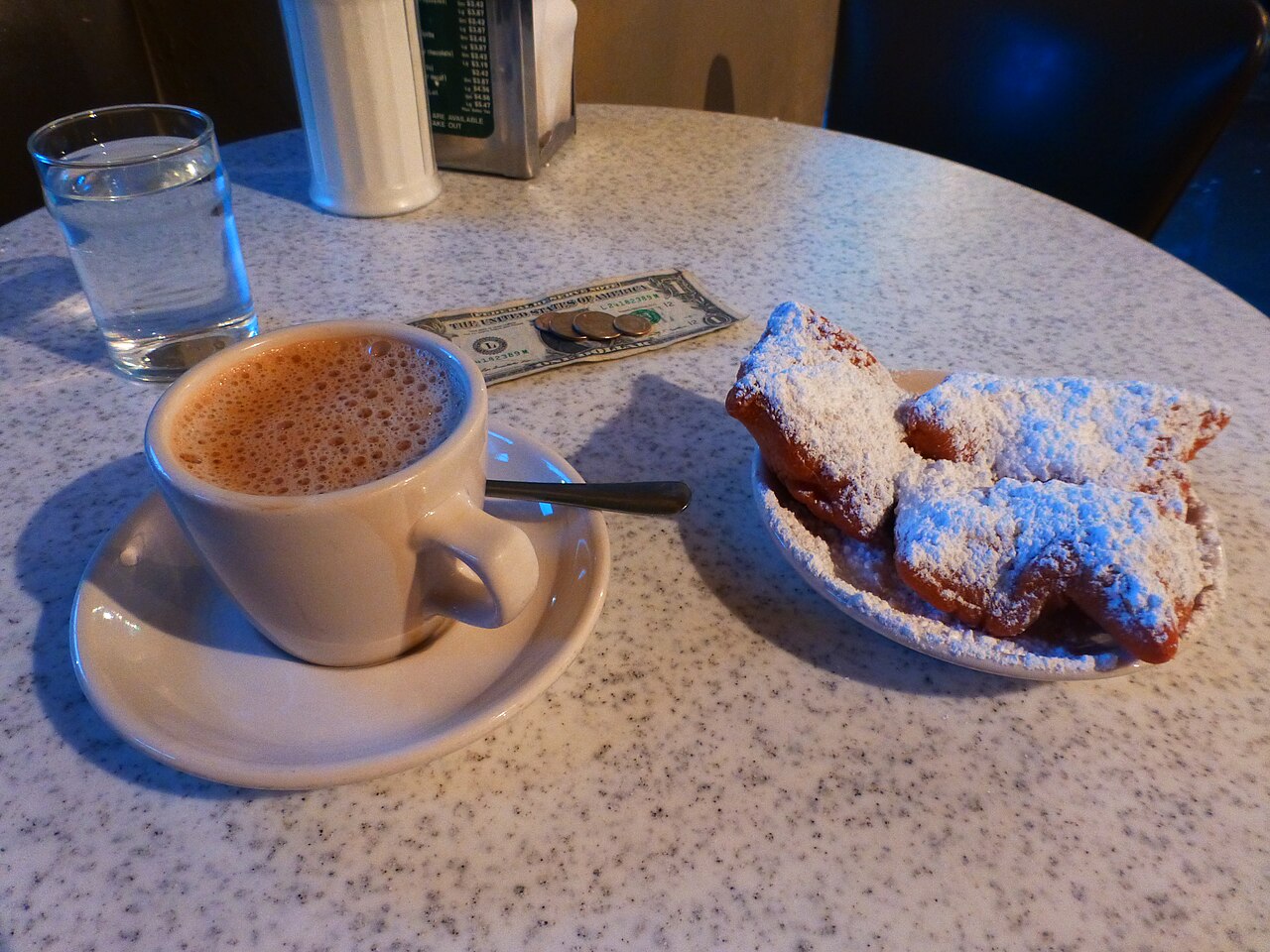
Coffee with chicory · café au lait
How it's made. Ground, roasted chicory root is blended into the coffee.1,2
How it's served. Drunk with cream and sugar.
What time is taking away
Civil War coffee substitutes
Southerners stretched or replaced coffee with okra seed, sweet potato, acorns, rye, toasted cornmeal and even cottonseed. Only New Orleans's chicory habit survived.1
What the record says
- The Union blockade kept coffee from reaching most Southern cities and rural areas.1
- Confederate coffee prices rose from about $1.20 a pound in March 1861 to about $196 a pound in February 1865.1
- New Orleans residents mixed roasted chicory root into their coffee, and the blend is still a city tradition.1
- After the blockade most places returned to pure coffee, but New Orleans kept adding chicory, with cream and sugar.2
- The Union blockade covered about 3,500 miles of coastline and 180 ports.2
- A Charleston housekeeper mixed cottonseed with coffee at two to one.1
The 'why' is contested. Many writers trace chicory to French habits and the Napoleonic blockade, not only the Civil War. The Smithsonian and Atlas Obscura pieces on this returned 403, so the French-roots explanation is not stated as fact. Café du Monde is not named in any opened source.
- Coffee on the Home Front During the Civil War · American Battlefield Trust, 2019 in the bibliography
- Coffee Drinks from Around the World: Chicory in History and Today · Barista Magazine, 2018 in the bibliography