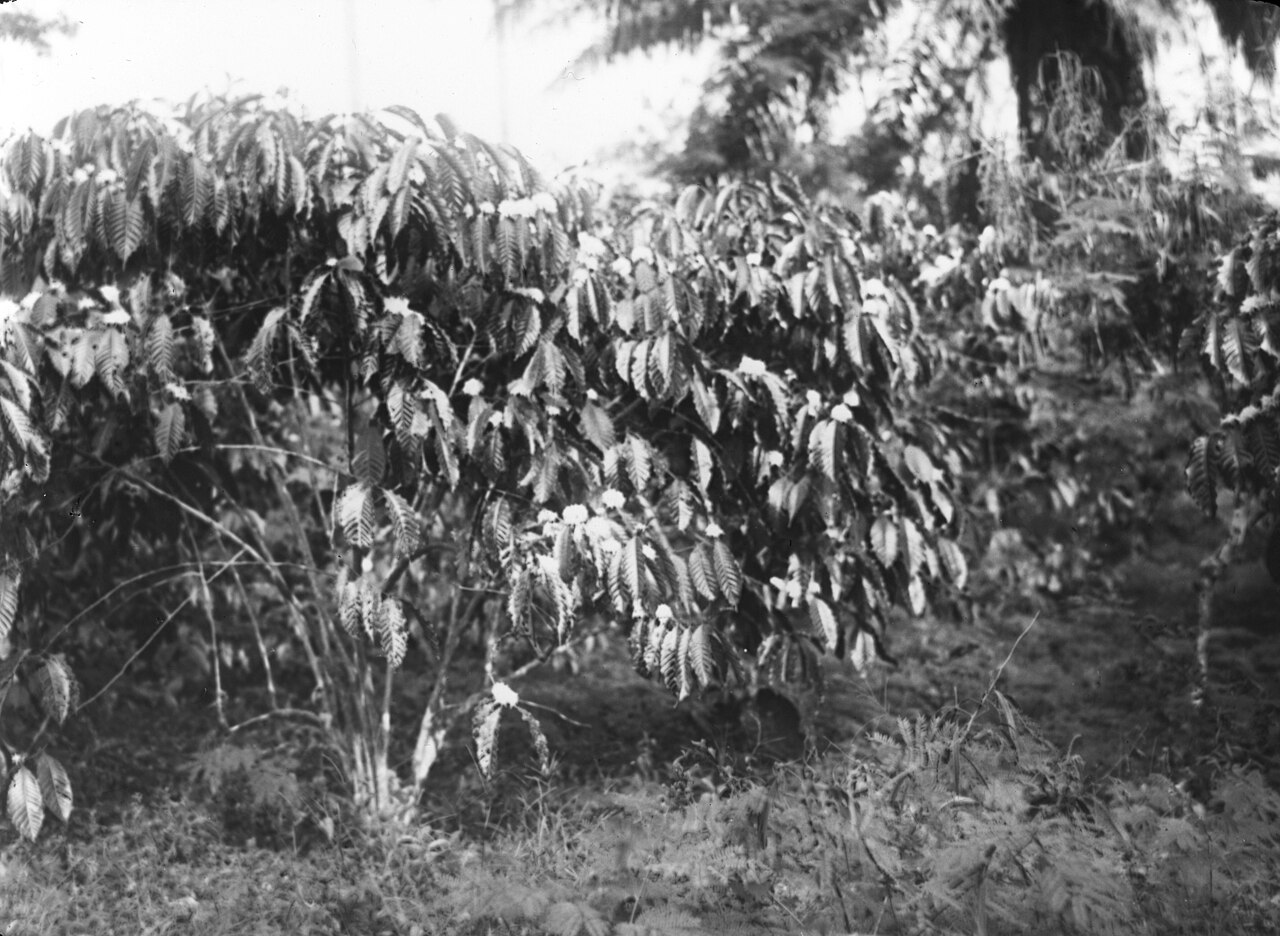
Oral history says the Haya people of northwest Tanzania brought coffee from Abyssinia in the 16th century. Their coffee, called amwani, was a robusta.
They did not brew it. They boiled unripe cherries with herbs and smoked them for several days, and the result was chewed. Coffee was used in greetings, tributes to royalty and religious rituals, and growing it needed royal authorisation.
In the late 19th century German colonial laws spread coffee planting across the region. The Haya lost the wealth their coffee monopoly had given them.
What time is taking away
Amwani: smoked, chewed coffee of the Haya
Unripe robusta cherries were boiled with herbs, smoked for several days and chewed whole. Coffee had a ceremonial role in greetings, royal tributes and religious rituals.1
What the record says
- Oral history holds that the Haya brought coffee from Abyssinia in the 16th century.1
- Haya coffee, called amwani, was a robusta.1
- Growing coffee in Haya society required royal authorisation.1
- German colonial laws in the late 19th century spread coffee planting and drew the Haya into the cash economy.1
- About 450,000 smallholders produce more than 90% of Tanzania's coffee.1
- SL28, Kenya's famous variety, descends from seed collected in Tanganyika in 1931.2
The amwani story rests on a coffee trader's page (Sucafina, 2020) citing oral history. Search snippets also mention variants (ripe cherries, cherries mixed with fat), which were not used. A scholarly source on Haya coffee could not be opened. The 'fading' status is an inference; no source states current practice.
- How much do you know about Tanzania's coffee industry? · Sucafina, 2020 in the bibliography
- SL28 · World Coffee Research, Arabica Coffee Varieties catalog in the bibliography