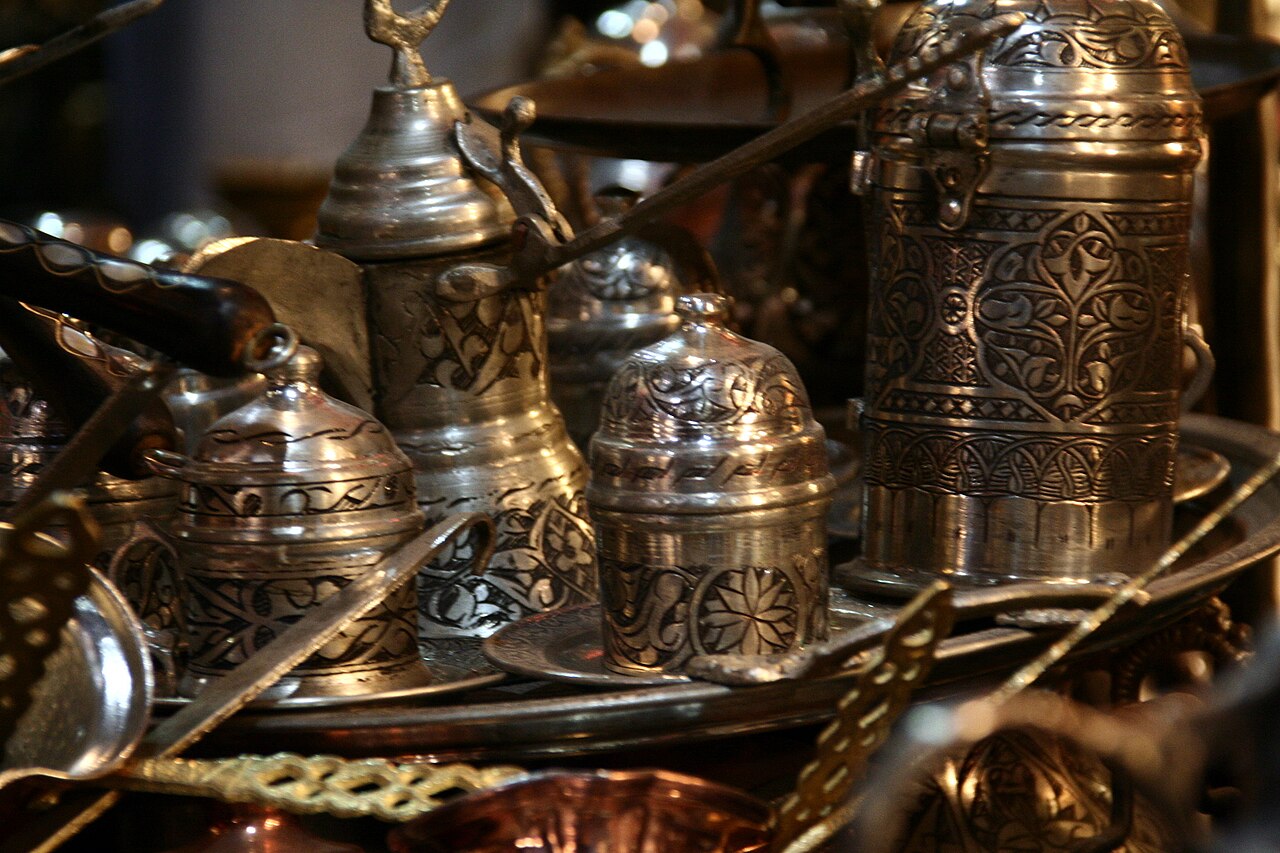
Turkish coffee is made from freshly roasted beans ground to a fine powder, brewed slowly with cold water and sugar to raise a foam, and served in small cups with a glass of water. UNESCO added Turkish coffee culture to its intangible heritage list in 2013.
The grounds left in the cup are often used to tell a fortune. Coffee also plays a part in engagement ceremonies and holidays.
Ottoman historian Peçevi dates Istanbul's first coffeehouses to 1554-55, opened by Hakim of Aleppo and Shams of Damascus. They drew opposition from preachers and some scholars.
After a fire in 1633, Sultan Murad IV banned coffee and tobacco. Coffeehouses stayed closed through his reign and that of Ibrahim I and reopened under Mehmed IV.
Turkish coffee · Türk kahvesi
How it's made. Freshly roasted beans are ground to a fine powder, then combined with cold water and sugar in a coffee pot and brewed slowly on a stove to produce foam.1
How it's served. In small cups with a glass of water, mainly in coffeehouses and at home among friends. The grounds are often read to tell a fortune.
What time is taking away
The Ottoman coffeehouse bans
Coffee faced fatwas and bans under Murad III (1574-1595), later lifted. After the 1633 fire, Murad IV banned coffee and tobacco, and Istanbul's coffeehouses stayed shut until the reign of Mehmed IV.2
What the record says
- UNESCO inscribed Turkish coffee culture and tradition in 2013.1
- UNESCO calls Turkish coffee a symbol of 'hospitality, friendship, refinement and entertainment'.1
- Turkish coffee plays a role in engagement ceremonies and holidays, and its rituals are passed on informally in families.1
- Peçevi dates the first Istanbul coffeehouses to 962 AH (1554-55), opened in the Tahtakale quarter by Hakim of Aleppo and Shams of Damascus.2
- Shams reportedly went back to Syria after three years with a profit of 5,000 gold pieces.2
- Under Murad III, a fatwa by Mufti Bostanzade Mehmed Efendi later approved coffee and the ban was lifted.2
- The chronicler Naima links the 1633 fire to discontent voiced in coffeehouses; Murad IV then banned coffee and tobacco.2
- The Ottomans repeatedly tried to curb coffeehouses in the 16th century, but by its end coffee was popular across Ottoman lands.3
Strong: UNESCO plus a scholarly chapter by Robert Mantran (Le café en Méditerranée, 1980, in French). Popular stories of Murad IV executing coffee drinkers in disguise were not confirmed by an opened source and were left out. UNESCO's page does not name the cezve, so the pot name is kept generic in the ritual.
- Turkish coffee culture and tradition · UNESCO Intangible Cultural Heritage, 2013 in the bibliography
- Le café à Istanbul au XVIIe siècle (in Le café en Méditerranée) · IREMAM / OpenEdition Books, 1980 in the bibliography
- Brewing controversy: how coffee sparked fierce debate in the 16th century · Medievalists.net (summarising Reda Asaad Sharif, Darah journal), 2025 in the bibliography