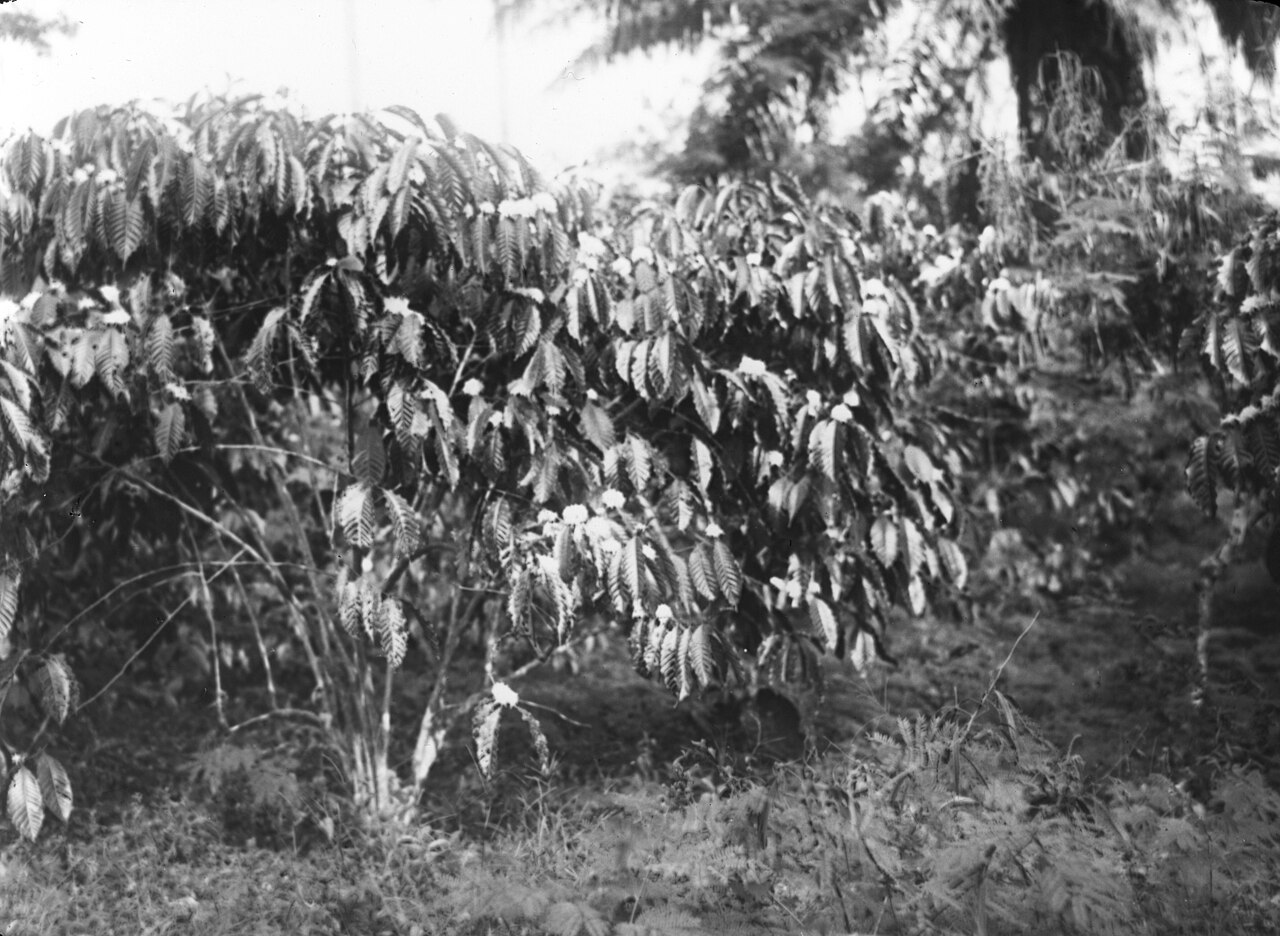
Uganda is a centre of diversity for robusta coffee (Coffea canephora), which grows wild in its forests. Four coffee species are native to the country.
Before robusta was a drink here, it was chewed and traded across borders. It was also an emblem of brotherhood and deep friendship, and it still appears in some Buganda marriage ceremonies, though that practice is declining.
Today Uganda is Africa's second-largest coffee exporter after Ethiopia. Most of what it exports is robusta, and farmers are also taking up excelsa, a native coffee that has not yet shown coffee wilt disease.
What time is taking away
Robusta as a token of brotherhood
Coffea canephora was used as an emblem of brotherhood and deep friendship and still features in some Buganda marriage ceremonies. Early use of robusta was mainly local chewing and cross-border trade rather than brewing.1
What the record says
- Four coffee species are native to Uganda: C. canephora, C. eugenioides, C. liberica var. dewevrei and C. neoleroyi.1
- Uganda is the world's seventh-largest coffee exporter and Africa's second-largest, after Ethiopia.1
- In 2019/20 Uganda exported about 330,540 tonnes of coffee, at roughly four parts robusta to one part Arabica.1
- Arabica is believed to have been introduced to Uganda in 1900.1
- Commercial use of robusta in Uganda dates to at least the mid-1800s.1
- Wild robusta was key to breeding resistance to coffee wilt disease.1
- Perhaps more than 200 Ugandan farmers grow excelsa, and some has been exported as Kisansa coffee to Italy and the UK.1
- C. neoleroyi is known in Uganda from a single collection.1
Built on one peer-reviewed review (Davis et al., Frontiers in Plant Science, 2023), which is strong. The Zoka forest drought-tolerance details appeared only in search snippets and were left out.
- A review of the indigenous coffee resources of Uganda and their potential for coffee sector sustainability and development · Frontiers in Plant Science, 2023 in the bibliography