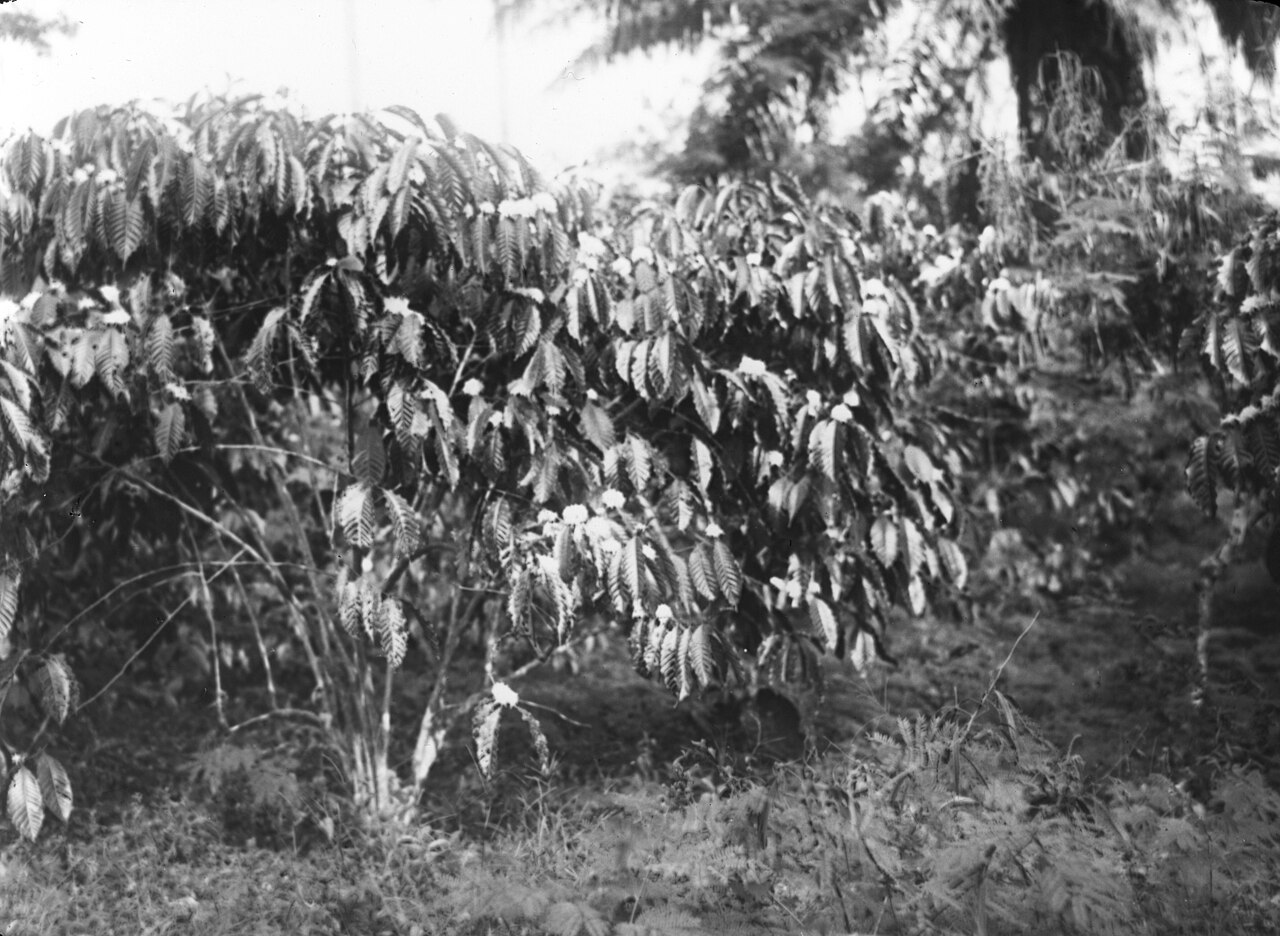
By the 15th century coffee was being grown in what is now Yemen. Formal cultivation on terraced fields is generally thought to have begun there in the 1300s.
Yemeni Sufis are said to have drunk coffee to stay awake for night devotions. One story credits a Sufi called al-Dhabhani with bringing it from Ethiopia, but historian Ralph Hattox says the tale contains 'more than a bit of legend'.
For a long time the port of al-Mukha, or Mocha, was the world's only source of coffee. By the 19th century Yemen's share of world demand had fallen to about one percent.
At home, Yemenis drink qishr, an infusion of dried coffee-cherry husks, sometimes spiced. Farmers often keep the best beans for family use and sell the husks.
Qishr
How it's made. Dried coffee-cherry husks are steeped like tea, sometimes with spices.1
How it's served. From mid-morning, qishr is the common drink for all Yemenis. Men usually drink bean coffee (bunn) at coffee shops in the early morning, and women often drink it at home.
What time is taking away
Smoke instead of pesticide
In Wadi al-'Udayn, farmers have used smouldering fires to smoke out coffee-cherry moth caterpillars rather than spraying pesticides.1
What the record says
- By the 15th century, coffee was being grown in what is now Yemen.2
- Formal cultivation of coffee on terraced fields is generally agreed to have started in Yemen in the 1300s.1
- Al-Mukha (Mocha) held a monopoly as the world's only source of coffee until the 18th century.1
- Yemen's coffee exports boomed during the first Ottoman occupation (1536-1636).1
- By the 19th century Yemen's share of world coffee demand had fallen to about one percent.1
- Sufi mystics in Yemen reportedly drank coffee to stay awake for night-time dhikr before it reached Mecca around 1500.3
- Historian Ralph Hattox says the story of the Sufi al-Dhabhani bringing coffee from Ethiopia contains 'more than a bit of legend'.4
- Yemenis name coffee varieties after the places they grow and can tell types apart within a single valley.1
- Coffee reached Yemen from Ethiopia, and the Red Sea port of Mukha became a major centre of the trade.5
Main source is a 1997 Saudi Aramco World feature, which is reliable but dated; conditions may have changed with the war. The Sufi origin is reported, not proven. AramcoWorld also names al-Shadhili as Mocha's legendary founder; we left that out as legend. Smithsonian and Al Arabiya pages returned 403.
- Yemen's well-traveled bean · Saudi Aramco World, 1997 in the bibliography
- History of coffee · National Coffee Association USA (About Coffee) in the bibliography
- Brewing controversy: how coffee sparked fierce debate in the 16th century · Medievalists.net (summarising Reda Asaad Sharif, Darah journal), 2025 in the bibliography
- Who first figured out how to make coffee? · The Straight Dope in the bibliography
- Yemen: food and drink · Al Bab in the bibliography