In 1908 Melitta Bentz of Dresden tore blotting paper from her son's notebook, put it in a brass pot pierced with holes, and poured water over the coffee. That year she received a patent and founded a company in her own name.
Frederick the Great of Prussia wanted his people off coffee. In the 1780s Prussia made roasting a state monopoly and hired about 400 war veterans to sniff out illegal roasting. The bans faded after his death in 1786.
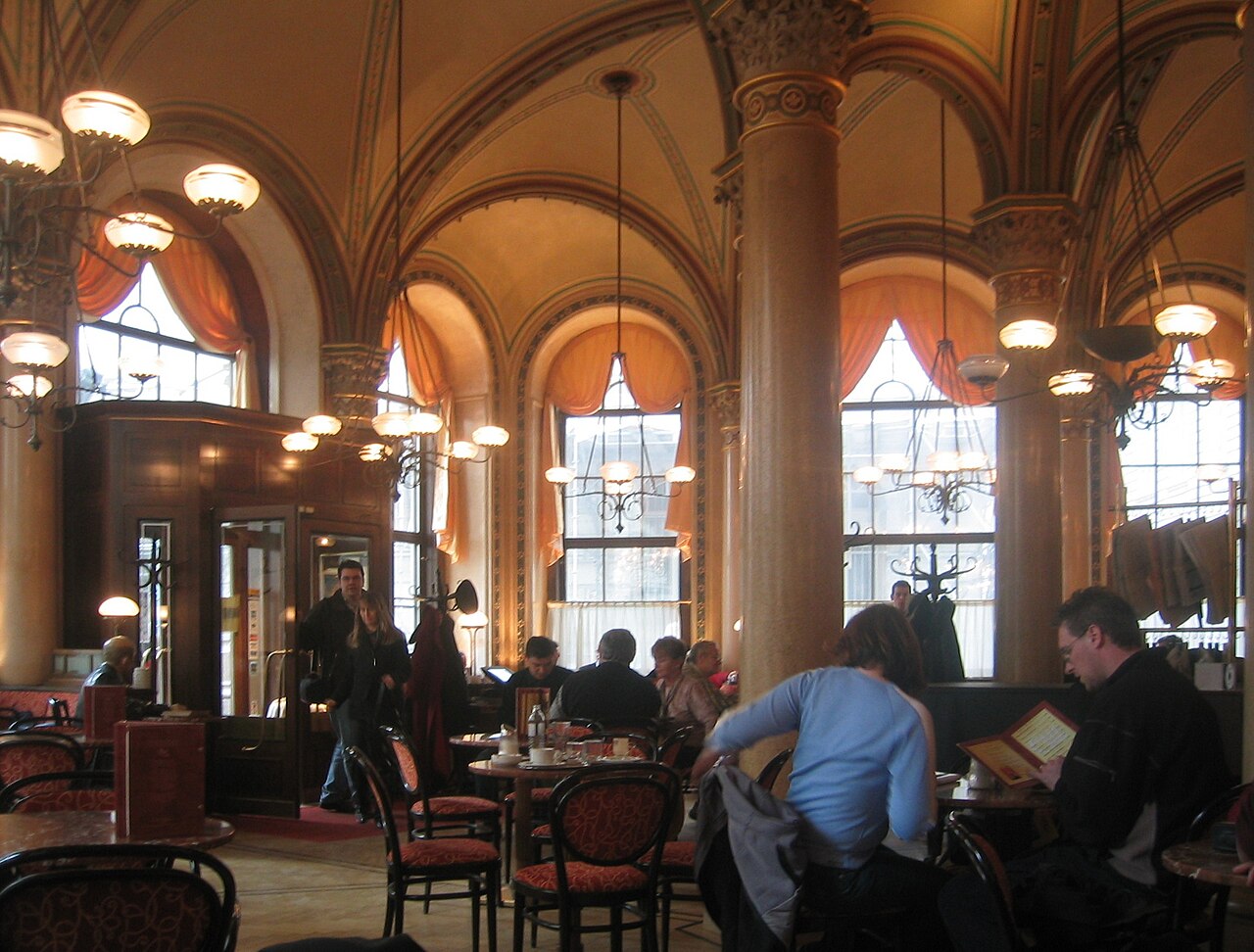
Coffee won. Kaffee und Kuchen, coffee and cake, is a mid-afternoon ritual, with bigger sessions at weekends.
Coffee and cake · Kaffee und Kuchen
How it's made. Coffee served with cakes such as Bienenstich, Black Forest cake or Frankfurter Kranz.1
How it's served. Mid-afternoon, around 3 to 4 p.m., with family, friends or coworkers; weekends bring larger spreads.
What time is taking away
What the record says
- Melitta Bentz made her first filter from blotting paper torn from her son's notebook, placed in a brass pot with a perforated top.2,3
- In June 1908 the Imperial Patent Office in Berlin granted Bentz a patent for her paper filter, and she founded the company 'M. Bentz' that year.2,3
- Bentz sold 1,200 filters at the Leipzig trade fair in 1909, and the company moved from Dresden to Minden in 1929.2,3
- A decree dated 13 September 1777, quoted in Ukers's 1922 'All About Coffee', has Frederick complain about his subjects' coffee drinking; its authenticity cannot be confirmed.4,5
- In 1781 Prussia made coffee roasting a state monopoly, with nobles, clergy and other privileged people exempt.6
- About 400 war invalids, nicknamed Kaffeeriecher or 'coffee sniffers', searched for illegal roasting; the monopoly and their role ended in 1787.4,6
- In 1766 the Landgrave of Hesse-Kassel outlawed coffee and later sent officials to search homes.6
- Hamburg's first coffeehouse opened in 1677 and Berlin's first public coffeehouse in 1721.7
- Kaffee und Kuchen typically takes place between 3 and 4 p.m., and coffee became widely affordable in Germany by the 19th century.1
The famous 'my people must drink beer' wording comes from a 19th-century retelling and is left out. Sources differ on the patent: June 1908 grant versus July 1908 publication. The 73-pfennig start-up capital story was not in any opened source and was left out. Kaffee und Kuchen's origin date is not well documented.
- Kaffee und Kuchen: A very German tradition · The Local Germany, 2020 in the bibliography
- Melitta Bentz · Wikipedia in the bibliography
- Melitta Bentz (1873–1950) · European Route of Industrial Heritage (ERIH) in the bibliography
- No Joe: The Time Coffee Was Banned in Prussia · Mental Floss, 2018 in the bibliography
- The King Who Tried to Kill Coffee · Standart Magazine (Issue 43) in the bibliography
- Coffee sniffers · Wikipedia in the bibliography
- History of coffee · Wikipedia in the bibliography