In the 1960s, everyone in Greece called it Turkish coffee. That changed after 1974, when a coup in Cyprus backed by the Greek junta provoked a Turkish invasion. Some Greeks began calling the drink Greek coffee, and some even called it Byzantine coffee.
By the 1980s, asking for 'Turkish coffee' in a Greek café was no longer acceptable. The same drink is called Armenian coffee in Armenia, Cypriot coffee in Cyprus and Bosnian coffee in Bosnia.
It is brewed in a small pot called a briki and judged by its foam. Greece also has a 20th-century coffee of its own: the frappé, shaken instant coffee over ice, usually dated to the 1957 Thessaloniki International Fair.
Greek coffee · elliniko
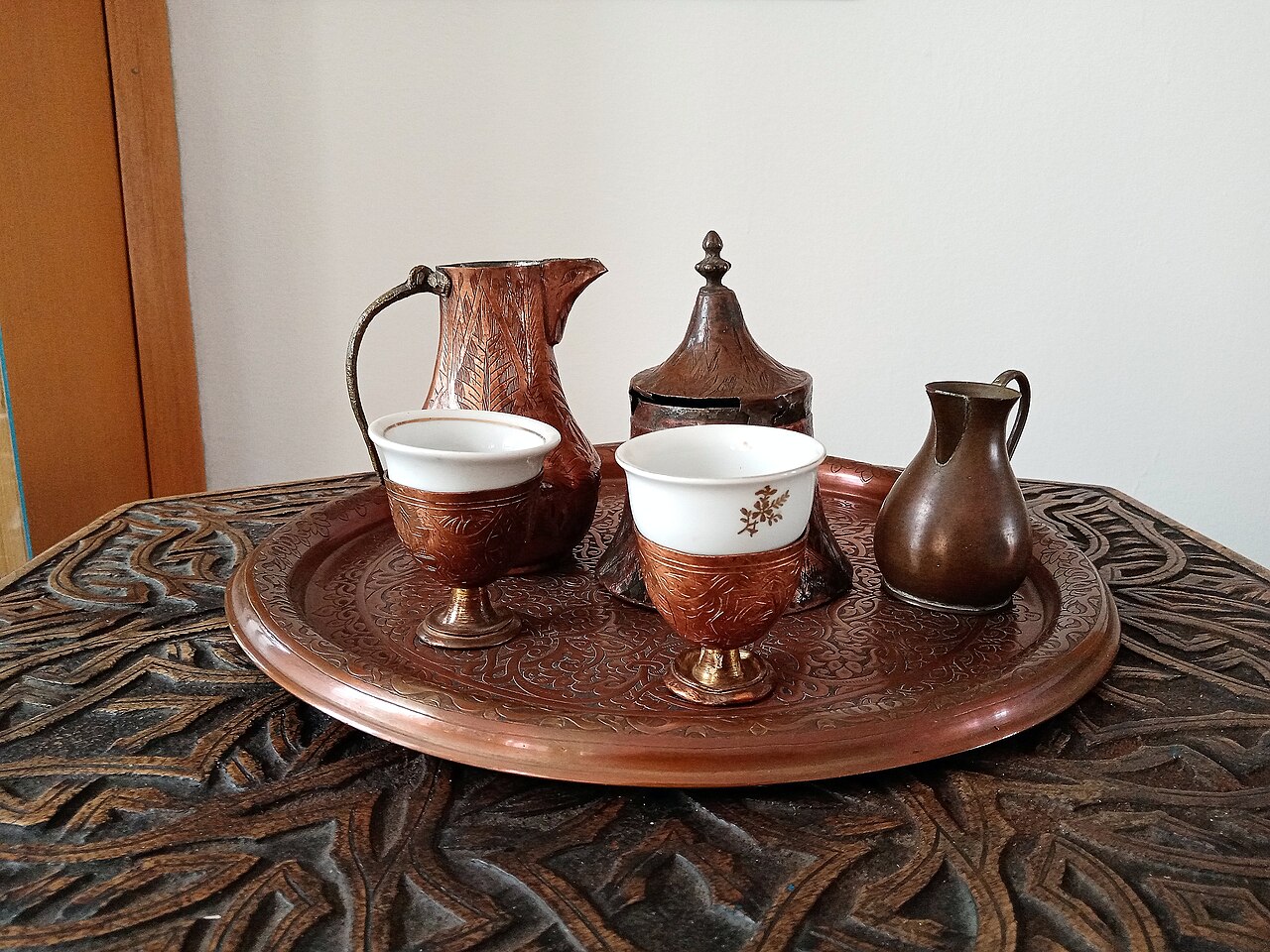
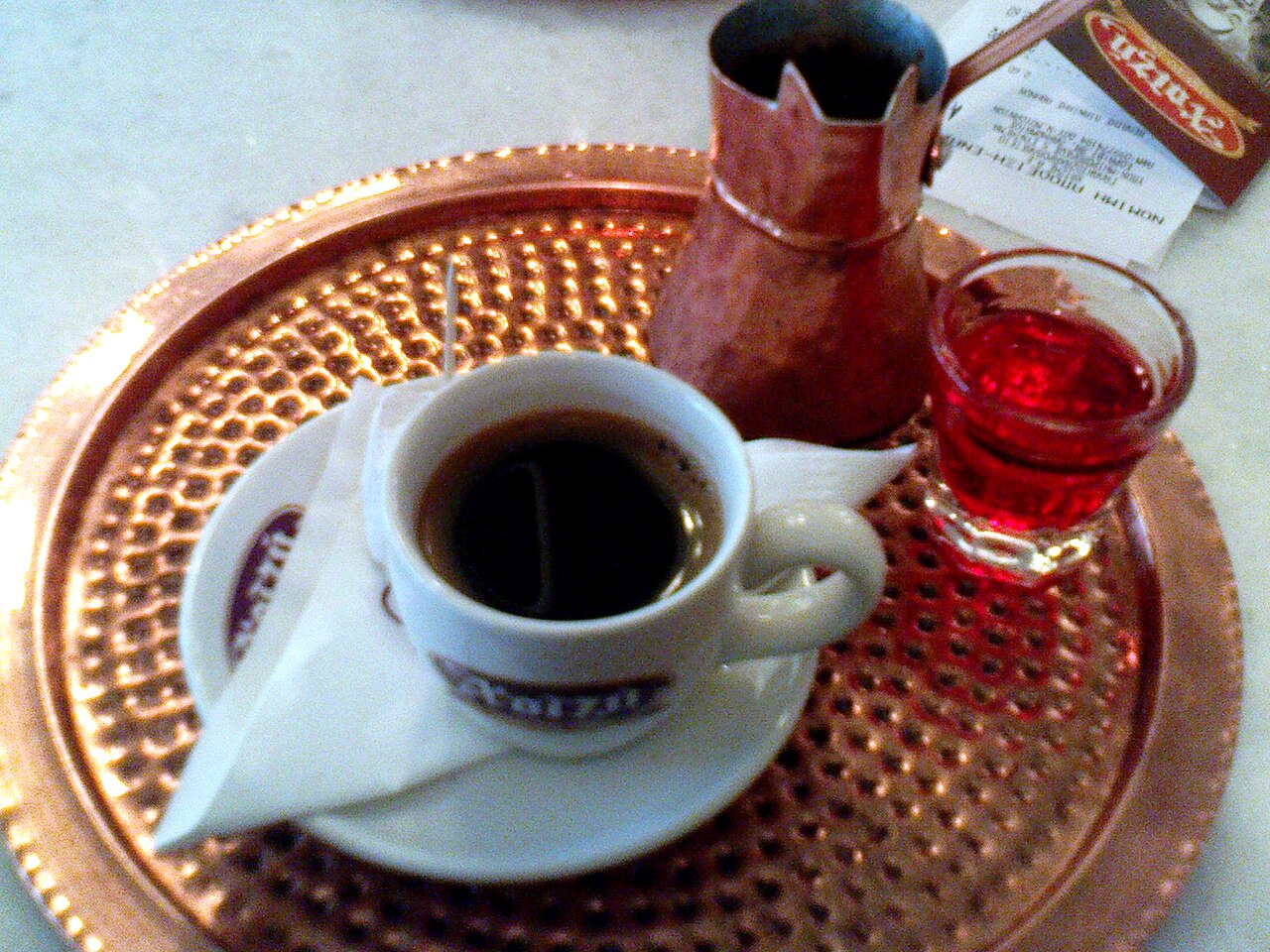
How it's made. Water and one heaped teaspoon of fine coffee per cup go into a briki, with sugar as ordered, and heat on medium-low until the foam rises; the pot comes off just before it boils.1
How it's served. Ordered sketos (no sugar), metrios (medium sweet) or glykos (sweet). Afterwards some swirl and upturn the cup to read their fortune in the grounds.
What time is taking away
What the record says
- Greek food scholar Albert Arouh said that in the 1960s 'everyone in Greece called it Turkish coffee', and noticed the name change after 1974.2
- In 1974 a Greek military junta pushed for a coup in Cyprus that provoked a Turkish invasion; afterwards some Greeks renamed the drink Greek coffee, and some called it Byzantine coffee.2
- The 'Byzantine' name is a stretch: the coffee arrived in the region in the 16th century, after the Byzantine Empire had ended.2
- By the 1980s, ordering 'Turkish coffee' in Greek cafés was no longer seen as politically acceptable.2
- The same drink is called Armenian coffee in Armenia, kypriakos kafes (Cypriot coffee) in Cyprus and Bosanska kafa in Bosnia.1,2
- Turkish coffee culture and tradition was inscribed on UNESCO's Representative List of Intangible Cultural Heritage in 2013.3
- The frappé is usually dated to September 1957 at the Thessaloniki International Fair, credited to Nescafé representative Dimitris Vakondios; historians have questioned this, as Nestlé ads may have promoted 'Nescafé frappe' earlier.4
- The freddo espresso, an iced espresso, was first made in Athens in 1991.4
Some sources trace the rename to tensions in the 1950s, with 1974 accelerating it; NPR's source dates the change to after 1974. The UNESCO entry is Turkey's, included for context, not as a Greek listing. The frappé origin story is disputed and kept hedged.
- Greek coffee: black as hell, sweet as love · Proto Thema (English edition), 2014 in the bibliography
- Don't Call It 'Turkish' Coffee, Unless, Of Course, It Is · NPR (The Salt), via KUNC, 2013 in the bibliography
- Turkish coffee culture and tradition · UNESCO Intangible Cultural Heritage, 2013 in the bibliography
- Frappé coffee · Wikipedia in the bibliography