Public coffee houses grew up in Middle Eastern cities as places for news and talk. Pilgrims returning from Mecca spread word of them.
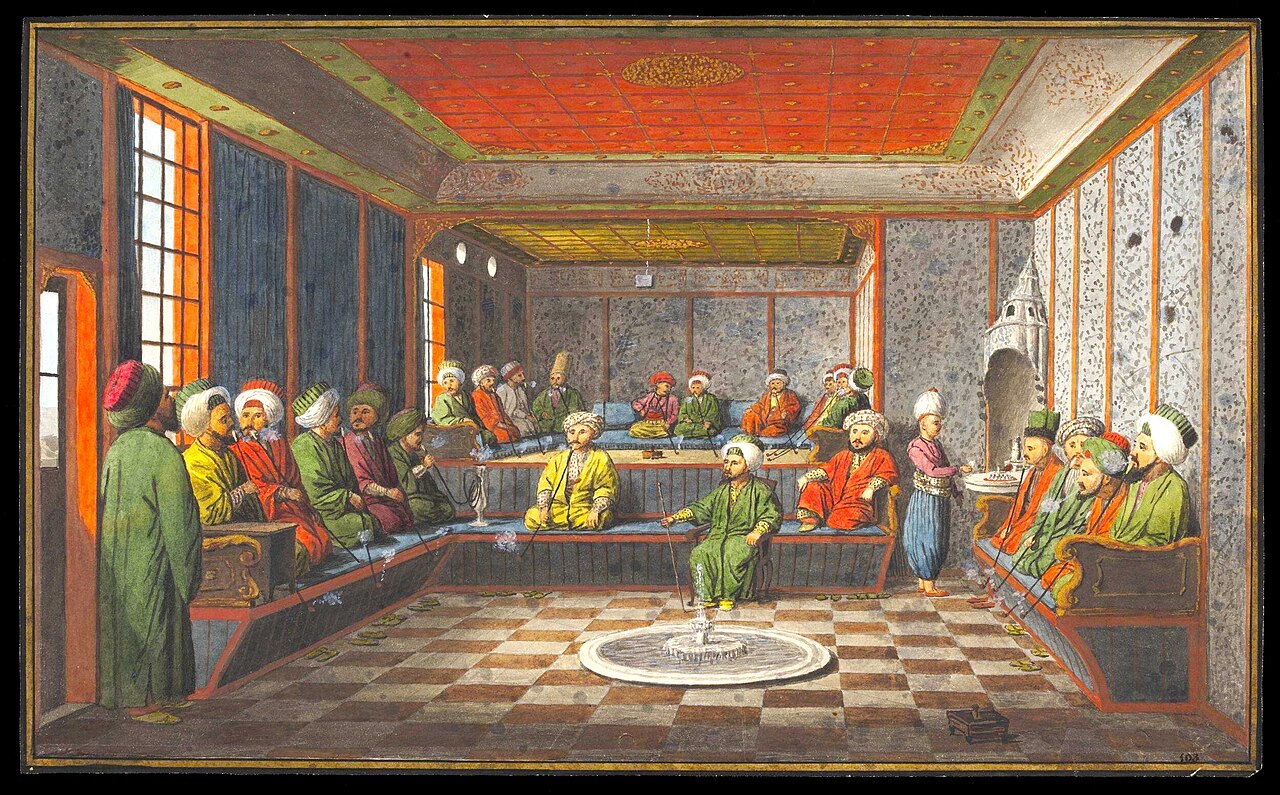
In Istanbul, the Ottoman historian Peçevi records that Hakem of Aleppo and Shams of Damascus opened the first two coffee houses in the Tahtakale district in 1554. Some read the Qur'an or books aloud there; storytellers and shadow plays drew crowds.
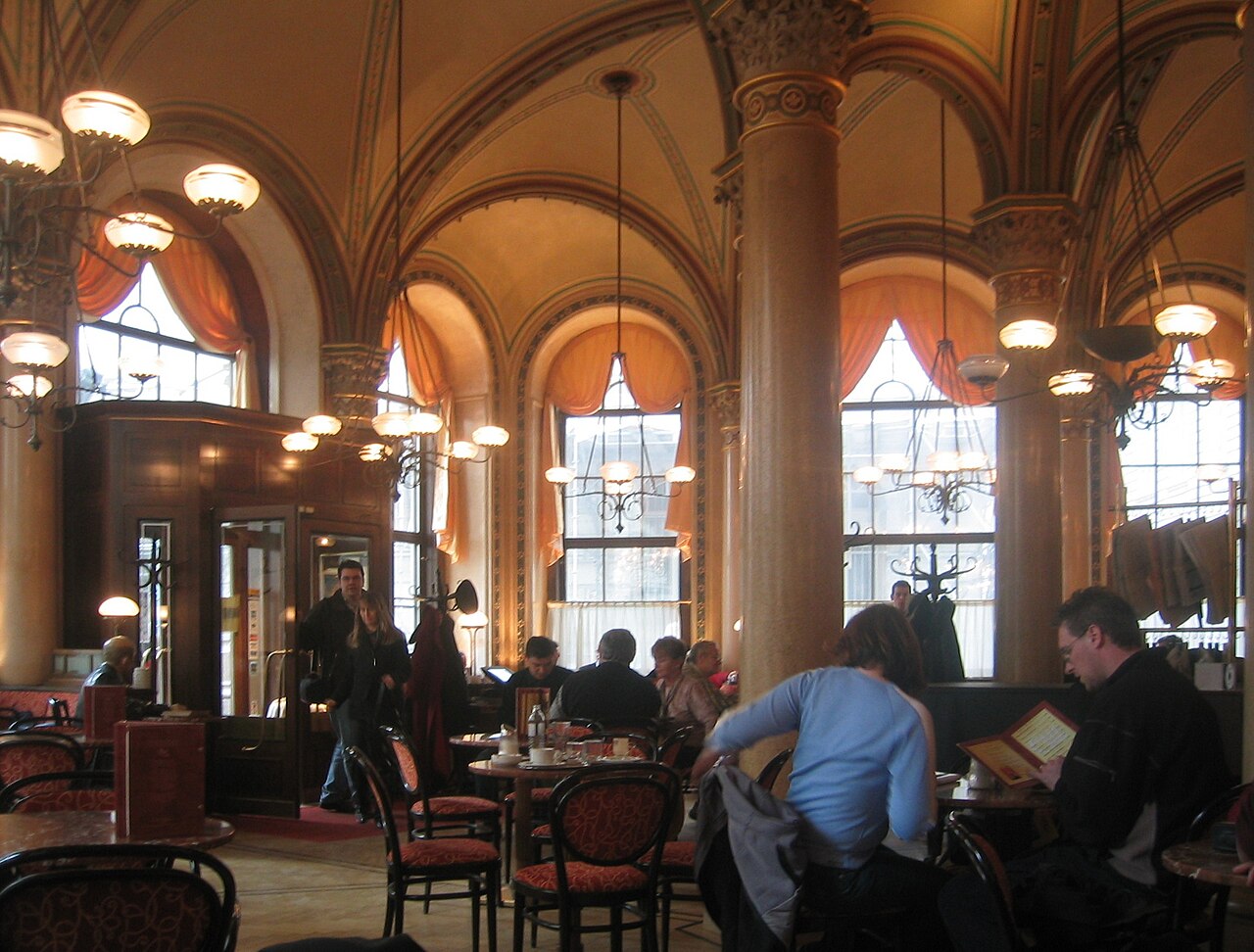
Europe followed. Venice had a coffeehouse by 1645, Oxford by about 1650, London by 1652, Vienna by 1685. Turkish coffee culture, still served with a glass of water, joined UNESCO's heritage list in 2013.
Turkish coffee · Türk kahvesi
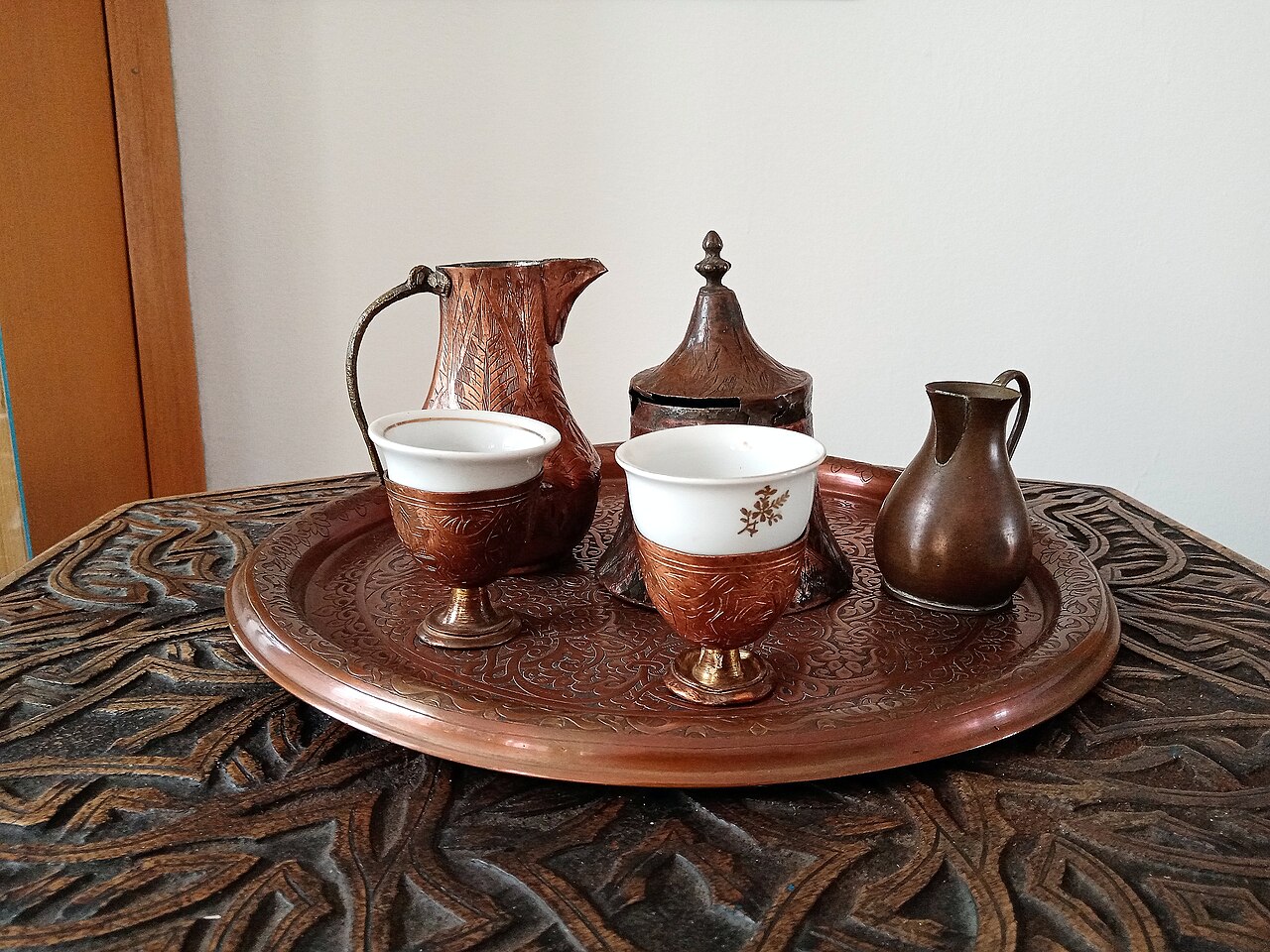
How it's made. Freshly roasted beans are ground to a fine powder and brewed slowly with cold water and sugar in a pot on the stove until foam forms.1
How it's served. In small cups with a glass of water, mostly in coffeehouses; the grounds left in the cup are often read for fortunes.
What time is taking away
Coffeehouse storytellers and shadow plays
Some Ottoman coffeehouses hosted meddah storytellers, orta oyunu comedy and Karagöz shadow plays, often with political satire; some were called kıraathane, reading houses.3
What the record says
- Public coffee houses (qahveh khaneh) in Middle Eastern cities were social and news hubs, sometimes called 'Schools of the Wise'.2
- According to the Ottoman historian İbrahim Peçevi, Hakem of Aleppo and Shams of Damascus opened Istanbul's first two coffeehouses in Tahtakale in 1554.3,4
- Other Ottoman sources give 1555 for the first coffeehouse in Istanbul.5,6
- Ottoman coffeehouses hosted meddah storytellers and Karagöz shadow plays; some were called kıraathane (reading houses) because regulars read books aloud.3
- The first mainland European coffeehouse opened in Venice in 1645, the first English one in Oxford in 1650, and London's in 1652.4
- Johannes Diodato received the first documented privilege to serve coffee publicly in Vienna in 1685.4,7
- Turkish coffee culture and tradition was inscribed on UNESCO's Representative List of the Intangible Cultural Heritage of Humanity in 2013.1
- UNESCO describes Turkish coffee as a symbol of hospitality, friendship, refinement and entertainment, with grounds often read to tell fortunes.1
Istanbul's first coffeehouse is dated 1553, 1554 or 1555 by different sources. Venice's first coffeehouse is dated 1640 or 1645 in different encyclopedia pages. A Greek claim of a 1475 'Kiva Han' coffeehouse is reported but unverified and left out.
- Turkish coffee culture and tradition · UNESCO Intangible Cultural Heritage, 2013 in the bibliography
- History of Coffee · National Coffee Association USA (aboutcoffee.org) in the bibliography
- Transformation of Ottoman coffeehouses to the present · Daily Sabah, 2015 in the bibliography
- History of coffee · Wikipedia in the bibliography
- Coffee and coffeehouses among the Ottomans · Hürriyet Daily News, 2014 in the bibliography
- Coffeehouse · Wikipedia in the bibliography
- Viennese coffee house · Wikipedia in the bibliography