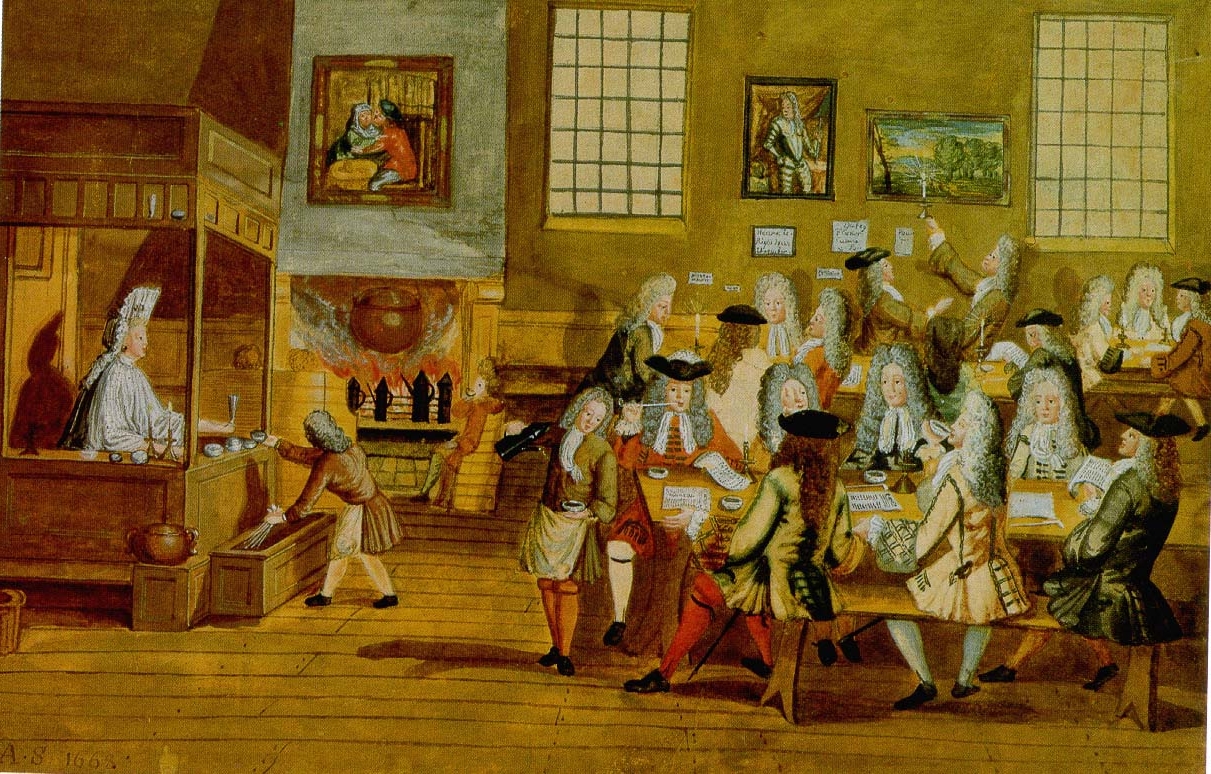
Women were shut out of English coffee houses in the mid-1600s. In 1674 a pamphlet appeared in London called The Women's Petition Against Coffee.
It complained that coffee made men dry, weak and useless at home. It said men wasted time and money in coffee houses and out-talked women there. It asked that coffee be banned for anyone under sixty.
The pamphlet was anonymous, signed by 'a Well-willer'. A year later Charles II tried to shut the coffee houses himself, and failed.
What the record says
- Women were banned from English and French coffeehouses in the mid-17th century.1,2
- The Women's Petition Against Coffee was printed in London in 1674 and attributed to an anonymous 'Well-willer'.3
- Its subtitle complained of the 'Grand Inconveniencies accruing to their Sex from the Excessive Use of that drying, Enfeebling Liquor'.3
- The petition claimed coffee made husbands impotent, and that men in coffeehouses gossiped enough to 'out-babble' women.3
- It asked that coffee be forbidden to anyone under sixty and that beer, ale and wine be promoted instead.3
- On 23 December 1675 Charles II issued a proclamation suppressing coffee houses; it was revoked on 8 January 1676.4
The pamphlet is satirical and its authorship is unknown; it may not have been written by women. Wikisource notes the source of its transcription is not known; the Folger catalogue record (Wing W3331) could not be opened (403). A 1674 'Men's Answer' reply is widely reported but was not confirmed in an opened source and is left out.
- Coffeehouse · Wikipedia in the bibliography
- English Coffeehouses, Penny Universities · Historic UK in the bibliography
- The Women's Petition Against Coffee (1674), transcription · Wikisource, 1674 in the bibliography
- Charles II (1630-1685) · Royal Museums Greenwich in the bibliography