On 19 November 1905, Adriano Telles opened A Brasileira on Rua Garrett in Lisbon. He sold coffee from Minas Gerais in Brazil, which people in Lisbon did not much like at home. To win them over, anyone who bought a kilo of ground coffee got a free cup.
A Brasileira is credited with first selling the bica, a small strong coffee. Lisbon still uses the word. It is pulled a little longer than an Italian espresso and tastes smoother because Portuguese roasts are lighter.
The name likely comes from the way coffee falls from the machine, like water from a spring, which is one meaning of 'bica'. Many locals say it stands for 'Beba isso com açúcar' (drink it with sugar). That is a popular belief, not a proven origin.
Bica
How it's made. An espresso-style coffee pulled to a slightly larger volume than in Italy, from lighter Portuguese roasts.1
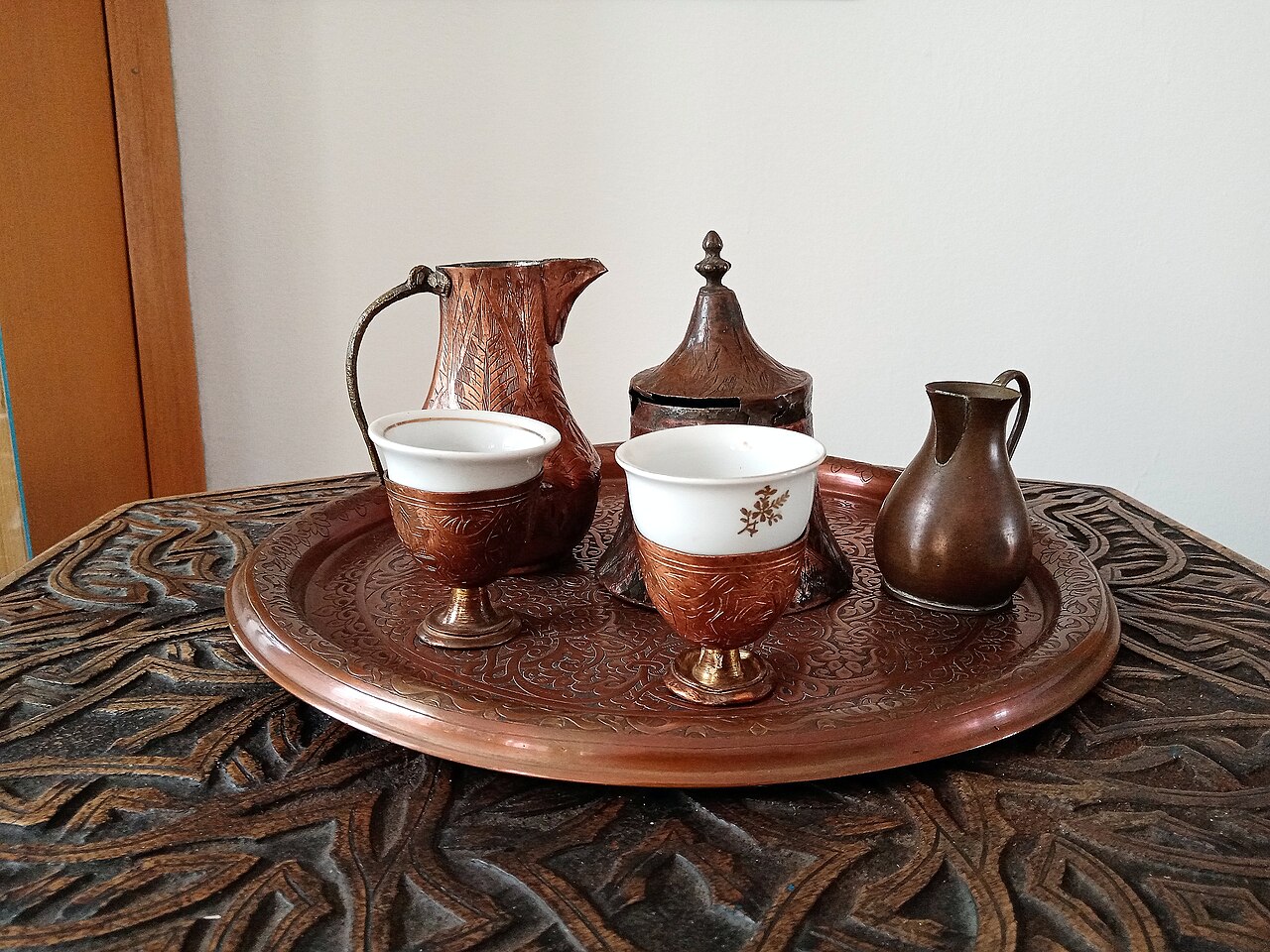
How it's served. Served in a demitasse cup; in most of Portugal it is simply ordered as 'um café'.
What the record says
- Café A Brasileira opened in Lisbon on 19 November 1905, founded by Adriano Telles as a shop selling Brazilian coffee from Minas Gerais.1,2
- Buyers of a kilogram of ground coffee at A Brasileira received a free cup.1,2
- A Brasileira is credited with being the first shop to sell the bica.1,2
- The early bica was served with fresh goat milk from nearby farms.1
- 'Bica' also means a spring or fountain in Portuguese, and the name is said to describe coffee falling from the machine; the 'Beba isso com açúcar' acronym is a popular belief.1
- In 1925 A Brasileira began exhibiting paintings by a new generation of Portuguese painters who were regulars.2
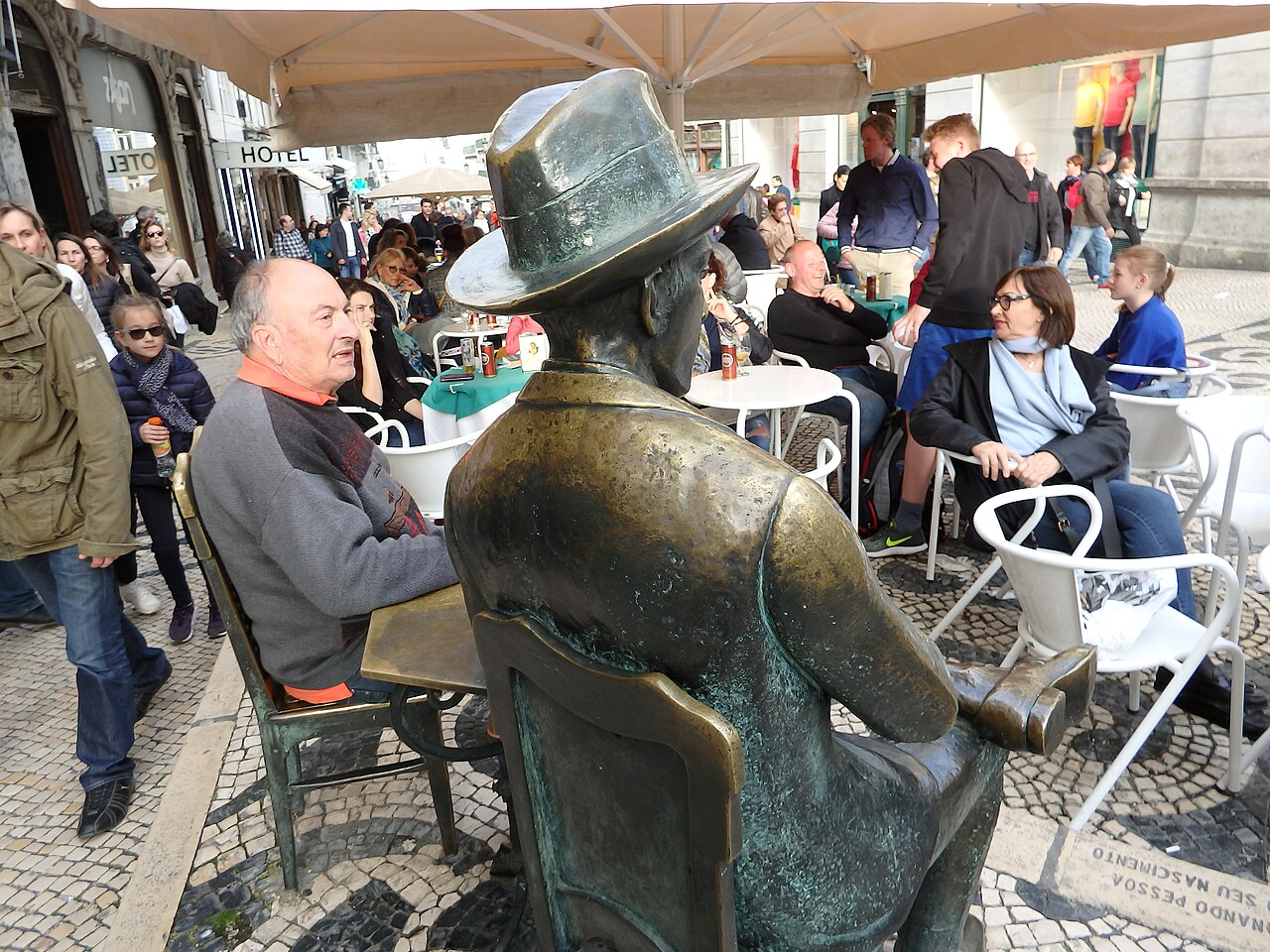
- A bronze statue of the poet Fernando Pessoa, a regular, by sculptor Lagoa Henriques was placed outside A Brasileira in 1988.2
The 'first bica' claim is repeated by sources but hedged ('credited'). The street number is given as 120 or 122 by different sources, so it is left out. The Porto 'cimbalino' name was not covered by an opened source.
- What about a bica? · Historic Cafés Route, 2023 in the bibliography
- Café A Brasileira · Wikipedia in the bibliography