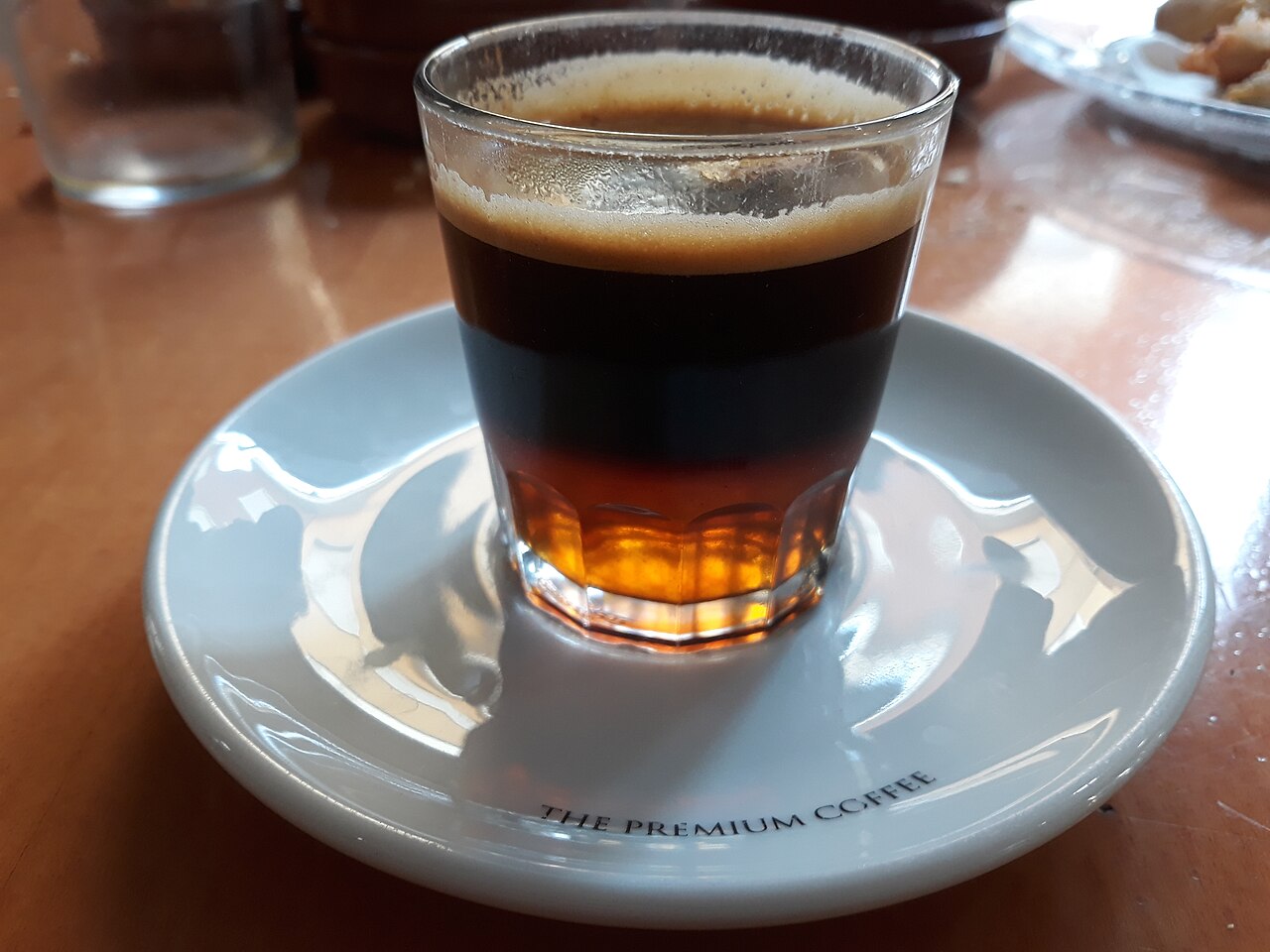
Spain likes its coffee with a shot of spirit. The carajillo is coffee with brandy, rum or another spirit, served in a small glass.
Valencia went further. Its cremaet is coffee with rum or brandy, sugar, cinnamon and citrus peel, set alight before it is served. It closes the esmorzaret, a traditional Valencian mid-morning meal.
The story goes that the carajillo began with Spanish soldiers in Cuba in the late 1800s, who added brandy to coffee for courage. Its real origin is not known.
Cremaet
How it's made. A spirit (often rum or brandy) is heated with sugar, roasted coffee beans, a cinnamon stick and lemon or orange peel and set alight, then a short coffee is added.1
How it's served. Served in a short glass or clay pot to finish the esmorzaret, a traditional Valencian meal.
What the record says
- A carajillo is coffee with brandy, rum, mezcal or coffee liqueur, served in a small glass; it is popular in Spain and Latin America.2
- The carajillo's origin is unknown, possibly Cuba.2
- According to a popular story, Spanish soldiers in Cuba in the late 19th century added brandy to coffee for courage; rum later replaced brandy, and Valencians refined the drink into the cremaet.1
- Cremaet is set alight, which lowers the alcohol and softens the taste, and it is served to finish the Valencian esmorzaret.1
- Café bombón is coffee with condensed milk, sometimes with a touch of rum or a similar spirit.1
Spain is thin: sources are a city tourism blog and an encyclopedia stub. The Cuban-soldier origin is a popular story and is kept as legend. No strong source was found tying café bombón's origin to Valencia, so that claim is left out.
- Cremaet, a Valencian must for coffee lovers · Visit Valencia in the bibliography
- Carajillo · Wikipedia in the bibliography